We are here to help you understand your own health and take charge of your own healthcare. Since many of our clients have high deductibles, we keep our prices low, and can save you from 30% to 80% on you lab fees. We travel to various public venues, from health food stores to city health fairs, providing a vast array of screening and medical tests for the general public. Our schedule is posted on our calendar. If you don't see us coming to your city or town, give us a call and perhaps we can arrange it. Blood pressure and glucose/diabetes tests are always free. You'll need to do a 12 hour fast for glucose and lipid profile tests. Walk-in or by appointment.
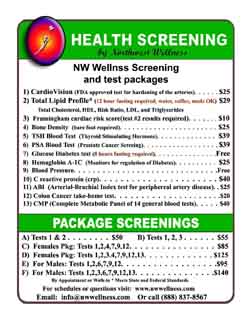
Common tests/packages
Click on the icon, and download the front part of our flyer listing the more common screening tests we do as well as some money saving packages
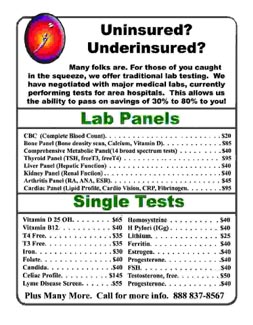
Blood tests
Click on the icon, and download the back of our flyer listing some of the more common blood test. If you don't see the test you're interested in, we can probably do it, but if you want to make sure, call us.

Screening Calendar
Click on this icon, and it will take you to our calendar. We update the calendar periodically so keep checking. If you've already been to our screenings, we may send you a postcard with our schedule.

What tests do you want?
If you would like more information on the tests that we provide, here is a link to a fantastic informative website. It's a website paid for by medical labs, and it is written for the general public
House calls
In the Portland/Vancouver metro area, we know there are those who are housebound, or not able to travel to a screening. We will travel to your location to perform these tests. We require a $95 minimum on the screenings, or a $25 travel fee. Give us a call or send us an email, and we'll get it set up.
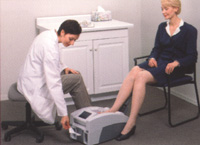 Bone density test
 Payment
 Confidentiality